
Explore Our
Discover the latest insights and tips on physiotherapy, wellness, and health.
Discover the latest insights and tips on physiotherapy, wellness, and health.
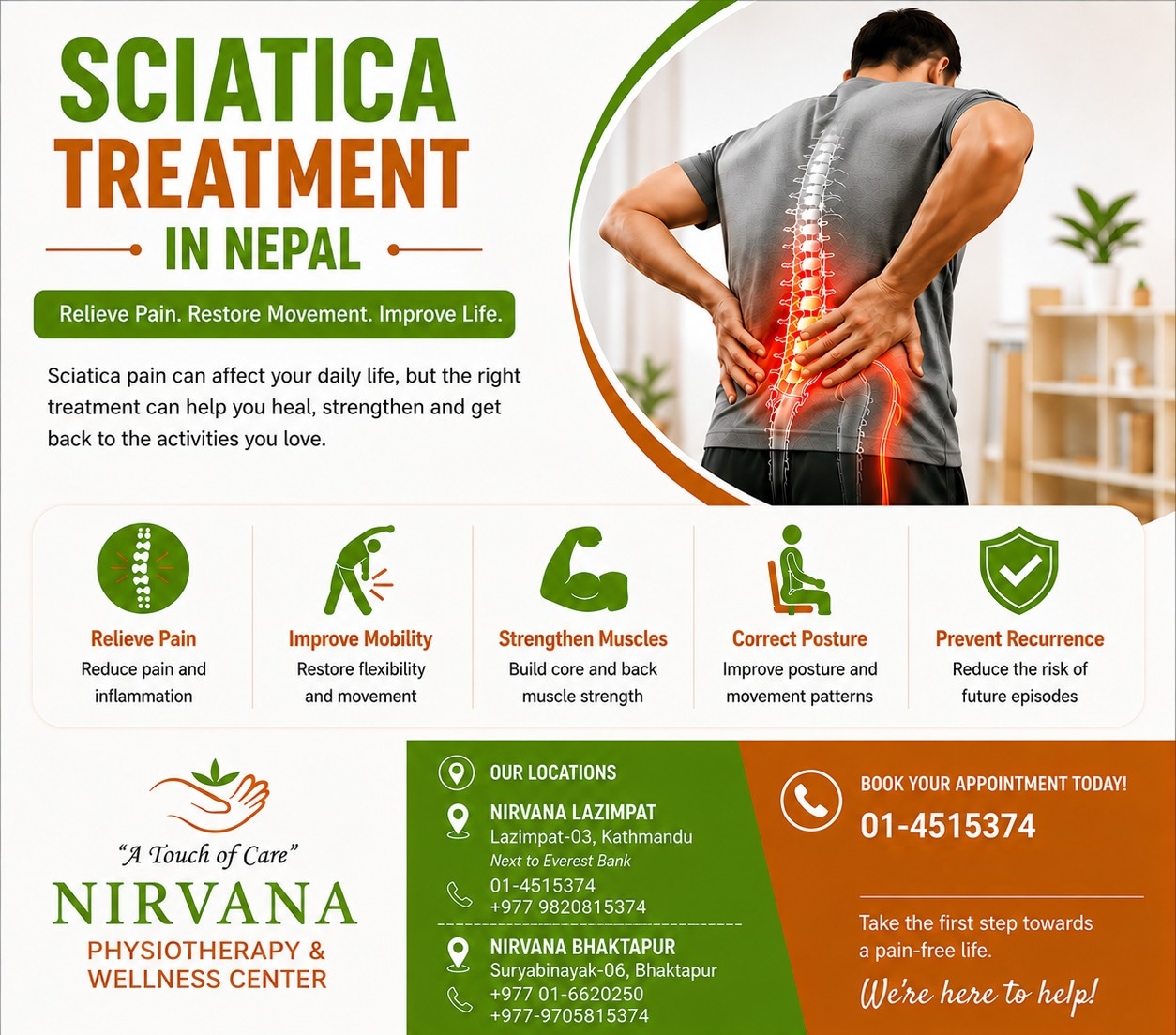
Having sudden stabbing pain starting in the lower back and radiating down the leg? Tingling, numbness or weakness in hips, buttocks or legs? These may be symptoms of sciatica, a common condition affecting millions of people worldwide.
The symptoms of Sciatica can make sitting, walking, working or sleeping comfortably difficult and can severely interfere with your activities of daily living. Fortunately, the majority of people can recover without surgery, with proper diagnosis and treatment.
To find the right treatment for sciatica in Nepal, the initial step is to understand the causes, symptoms, and available treatment options.
Sciatica is when the sciatic nerve, the longest nerve in the human body, is irritated, inflamed, or compressed. The sciatic nerve starts in the lower part of the spine, passes through the hips and buttocks and runs down both legs.
If this nerve is compressed or irritated, it may cause pain and other symptoms along its course.
There are several conditions which may cause sciatica to occur:
One of the most frequent causes of sciatica is a slipped or bulging disc in the lower back. The disc has the potential to compress the sciatic nerve and cause pain and discomfort.
This is when the spinal canal is constricted and compresses nerves in the lower spine.
As the spinal discs wear out with age, they may compress nerves and cause sciatica symptoms.
Irritation of the sciatic nerve can occur due to tightness or inflammation of the piriformis muscle in the buttocks.
Sitting for long periods, particularly with a bad posture, can put strain on the lower back and sciatic nerve.
Accidents, falls, or injuries from sports can damage structures around the sciatic nerve and cause symptoms.
Sciatica can cause any kind of pain, from mild discomfort to a severe pain. Common symptoms include:
When symptoms continue or get worse, a full medical examination is advised.
Some things can make it more likely to get sciatica:
A health care provider can diagnose sciatica by doing the following:
Your physiotherapist or doctor will evaluate your posture, muscle strength, flexibility, reflexes and movement patterns.
Knowing what your symptoms are and what you do in the day can help you determine what's going on.
In some instances, imaging tests like an X-ray, MRI or CT scan might be necessary to diagnose a problem in the spine that's involved with the sciatic nerve.
Physiotherapy is one of the best non-surgical treatments for sciatica. A customised physiotherapy program can help:
Treating techniques that can be performed hands-on can help to decrease muscle tension, increase joint mobility and reduce nerve compression.
Special exercises are used to build up the muscles that support the spine and build greater stability.
Good body posture will minimise the excess strain on the lower back and sciatic nerve.
Applying heat and cold can help control pain and inflammation during the recovery process.
Taking simple steps, such as moving frequently, using ergonomic workstations and maintaining weight, can make a big difference in improving symptoms.
Here are some exercises that can help relieve sciatica.
With the right guidance, the following exercises can help alleviate pain:
Assists in decompressing the lower back and enhancing its flexibility.
Tightens muscles that can irritate the sciatica nerve.
Enhances mobility of the spine and decreases stiffness.
Builds strength in core muscles and helps maintain proper alignment of the spine.
Increases flexibility and decreases stress in the lower back.
It is important to always seek advice from a physiotherapist prior to beginning an exercise regimen for sciatica.
Although some cases are not preventable, here are some habits that can help lower your risk:
If you are having trouble, look for professional assistance if:
Early treatment may result in shorter recovery periods and long-term results.
At Nirvana Physiotherapy & Wellness Center, we use evidence-based physiotherapy treatments to impact the underlying cause of sciatica rather than just symptomatically.
Our skilled physiotherapists tailor your care to your specific needs, prioritising pain relief, rehabilitation and restoring mobility and posture, while also aiming for long-term healing. Whatever caused your Sciatica, whether it's a disc herniation, muscle tightness or posture problems, we are dedicated to helping you get back to a life without Sciatica.
Sciatica is painful and annoying, but it can be treated. Being able to recognise the signs and symptoms and seek timely professional care can aid in recovery so that you will recover faster and reduce the chances of complications down the road.
When it comes to effective sciatica treatment in Nepal, physiotherapy is one of the safest and most effective treatments available. Personalised treatment, specific exercises and professional guidance will help you get back to your normal routine with less pain and greater confidence.
Do not be hindered in your life by sciatica. Call Nirvana Physiotherapy & Wellness Center today to find out how you can improve your movement, recover quicker, and spend more of your life without pain.
Physiotherapy, gentle stretching, proper posture, and professional treatment can help relieve sciatica symptoms more effectively than relying solely on rest.
Physiotherapy can effectively treat the underlying causes of many sciatica cases and help prevent recurrence.
Recovery varies depending on the cause and severity. Many patients experience significant improvement within a few weeks of starting treatment.
Yes. Gentle walking can improve circulation, reduce stiffness, and support recovery when done appropriately.
Nirvana Physiotherapy & Wellness Center offers personalised physiotherapy programs and rehabilitation services for individuals suffering from sciatica and lower back pain.
Written by
Nirvana Physiotherapy and Wellness Center
Nirvana Physiotherapy and Wellness Center
Continue Reading
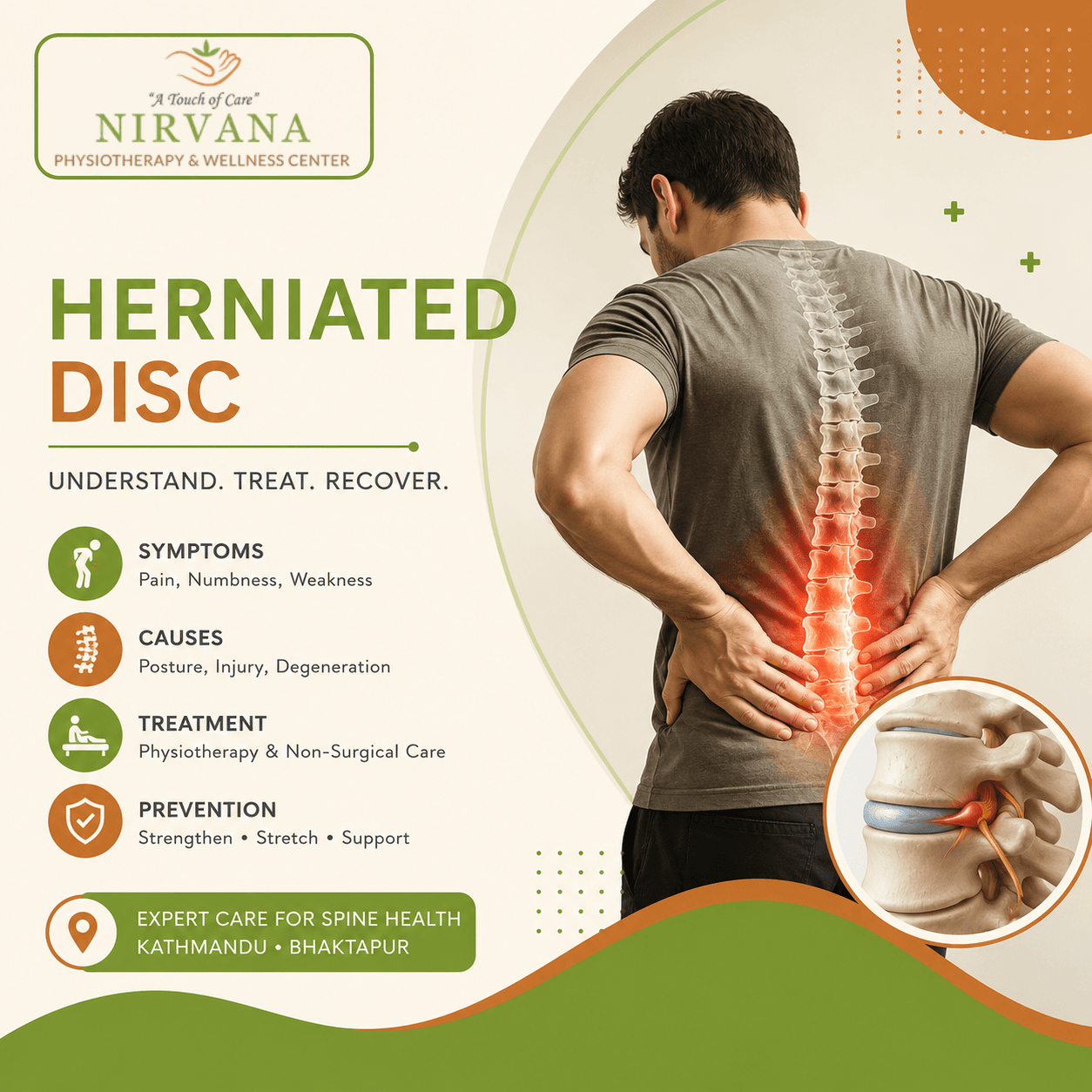
A herniated disc happens when that soft inner material pushes through a tear or weak spot in the outer layer. This can irritate or press on nearby spinal nerves, and that's usually where the pain, numbness, or muscle weakness comes from. A lot of people call it a slipped disc, but honestly, nothing actually slips. It's the inner material pushing out through damaged outer tissue, not the disc itself moving out of place.
Read article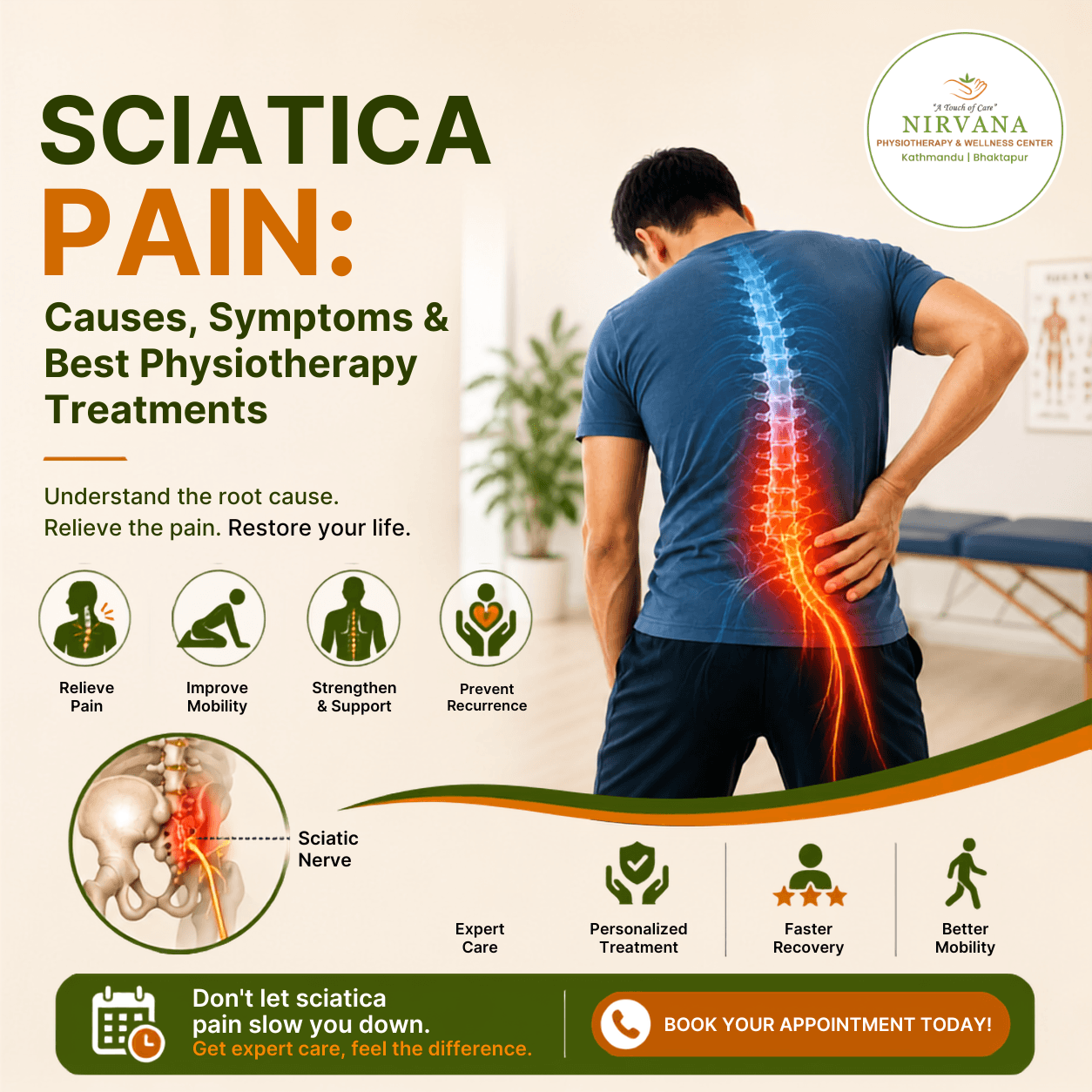
Lower back pain shooting down into your leg? That's probably sciatica. It's one of the most common causes of this kind of pain, and age doesn't really factor into who gets it. What's happening is the sciatic nerve, the longest one in your body, getting irritated or squeezed somewhere along its route. Sometimes it's just annoying. Other times it's sharp enough that sitting, walking, even standing still becomes a genuine problem.
Read article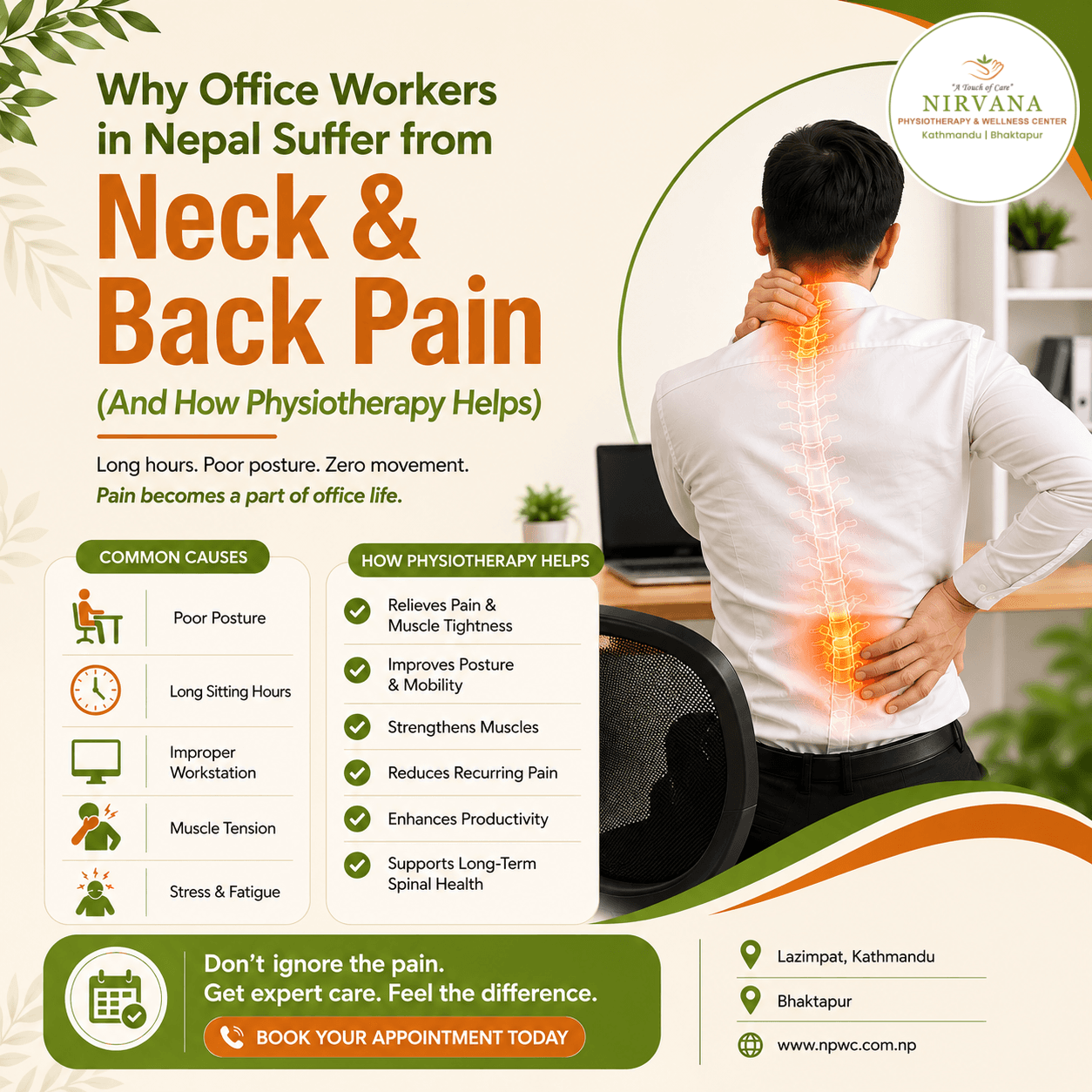
Most people reach for a painkiller. Maybe book a massage when it gets bad enough. Both help, for a while. Neither actually fixes what's wrong. Physiotherapy works differently; it tracks down what's actually causing the pain and helps the body fix it properly instead of just quieting it down for a few hours.
Read article