
Explore Our
Discover the latest insights and tips on physiotherapy, wellness, and health.
Discover the latest insights and tips on physiotherapy, wellness, and health.

Eight hours in a chair, staring at a screen. Sound familiar? You're not the only one. Walk into any office in Kathmandu, and you'll find someone rubbing their neck or shifting around trying to get comfortable. It's just become normal.
Most people reach for a painkiller. Maybe book a massage when it gets bad enough. Both help, for a while. Neither actually fixes what's wrong. Physiotherapy works differently; it tracks down what's actually causing the pain and helps the body fix it properly instead of just quieting it down for a few hours.
So if neck pain has been on your mind lately, it helps to first understand why it's happening at all.
Desk jobs are harder on the body than people give them credit for.
Sitting too long. Slouching without noticing. A monitor that's just slightly too low or too high. Barely moving for hours at a stretch. Weak core muscles that aren't doing their job. A chair or desk that was never really built with your body in mind. And stress, which quietly tightens up muscles you didn't even know were tense.
None of this feels like a big deal on any single day. But stack it up over months, and you end up with muscle imbalance, stiff joints, and pain that just won't quit.
A lot of people just shrug this off as "part of the job." It shouldn't be.
Stiff neck. Headaches that seem to happen more than they used to. Shoulder pain. That tight, knotted feeling across your upper back. A lower back that aches by 3 pm. Tingling or numbness running down your arms. Less flexibility than you remember having. Discomfort just from sitting too long, even in a decent chair.
Ignore these long enough, and they start bleeding into other parts of life. Work gets harder. Sleep gets worse. It adds up.
Painkillers dull things down, sure. That part works.
What they don't do is fix your posture. They don't strengthen anything. They don't correct a joint that isn't moving right, and they definitely don't fix a muscle imbalance that's been building for years.
Skip the actual cause and the pain just comes back, usually within days. Sometimes it's worse the second time around.
A real physiotherapy assessment digs into what's actually behind the pain, not just the spot where it hurts.
From there, treatment gets built around what you specifically need. Manual therapy uses hands-on techniques to loosen tight muscles and help joints move properly again. Posture correction teaches your body how to sit and stand without quietly straining your spine all day. Stretching programs target the specific muscles that desk work tends to lock up.
Strengthening work builds up your neck, shoulders, back, and core so the pain has less reason to return. Ergonomic advice looks at your actual workstation and finds small changes that make a real difference. Dry needling can help release stubborn trigger points when it's the right fit. And for some people, chiropractic adjustments are part of the picture too, when it makes clinical sense.
Small changes add up more than people expect.
Get up every 30 to 45 minutes. Keep your screen at eye level instead of looking down all day. Use proper lumbar support when you sit. Actually stretch during breaks, not just scroll your phone. Work on your core. Stay active after work instead of collapsing on the sofa. Drink enough water; it matters more for your muscles than most people realise.
None of this needs to be intense. It just needs to happen regularly.
Book an assessment if pain's stuck around for more than a week. If it keeps coming back no matter what you do. If there's numbness or tingling involved. If headaches are becoming a regular guest. If sitting itself has started to hurt. If work is starting to suffer because of any of this.
Catch it early, and recovery is usually faster, and a lot less likely to turn into something chronic down the line.
At Nirvana Physiotherapy & Wellness Center, we build treatment plans around your actual body and your actual life, not a template.
That includes full physiotherapy assessments, evidence-based treatment, manual therapy, chiropractic care where it's appropriate, exercise rehabilitation, postural correction, ergonomic guidance, and recovery plans that are actually built for you specifically.
Office worker, student pulling long hours, or just someone who spends most of the day in front of a screen, our team can help get you moving comfortably again.
This doesn't have to be permanent. It really doesn't. With the right assessment, proper physiotherapy, and a few better habits at your desk, pain relief and better posture are genuinely within reach, and future injuries become a lot less likely.
The sooner the actual cause gets addressed, the easier recovery tends to be, and the better your spine holds up years down the line.
At Nirvana Physiotherapy & Wellness Centre, our physiotherapists offer personalised assessments and evidence-based treatment built to help you recover the right way. Neck stiffness, lower back pain, tight muscles, posture that's slipped after too many hours at a desk, whatever it is, we're here to help.
Book a consultation. Take the first step toward moving without pain.
Visit us in Lazimpat, Kathmandu, or in Bhaktapur.
Call us or book online, and get physiotherapy care built around what you actually need.
Can physiotherapy cure office-related neck pain?
Yes. Physiotherapy addresses the underlying causes such as muscle imbalance, poor posture, and restricted movement rather than simply masking symptoms.
How many physiotherapy sessions are usually needed?
It depends on the severity of your condition. Many office workers notice improvement within a few sessions, while chronic cases may require a longer rehabilitation plan.
Is physiotherapy better than taking painkillers?
Painkillers provide temporary relief, while physiotherapy focuses on correcting the cause of the pain for longer-lasting recovery.
Can poor posture cause headaches?
Yes. Forward head posture and neck muscle tension are common contributors to tension headaches.
Does NPWC treat both neck and lower back pain?
Yes. Our physiotherapists treat a wide range of musculoskeletal conditions, including neck pain, lower back pain, shoulder pain, sports injuries, and posture-related issues.
Written by
Nirvana Physiotherapy and Wellness Center
Nirvana Physiotherapy and Wellness Center
Continue Reading

Chiropractic care is generally built around spinal adjustments using targeted, hands-on manipulation to improve joint mobility and relieve pressure on nerves. It tends to work fastest for acute spinal issues like a locked joint or sudden lower back stiffness. Physiotherapy takes a broader approach. It combines manual therapy with exercise, movement re-education, and rehabilitation to address not just the pain, but why it keeps coming back. It's usually the better fit for long-term recovery, post-injury rehab, and conditions that go beyond the spine.
Read article
Shoulder pain is one of the most common musculoskeletal problems affecting people of all ages. Whether you spend long hours at a desk, frequently use your smartphone, drive for extended periods, or work from home, your daily posture can have a significant impact on your shoulder health. The short answer is yes, poor posture can cause shoulder pain. In many cases, it is one of the leading causes of chronic shoulder discomfort, stiffness, and reduced mobility.
Read article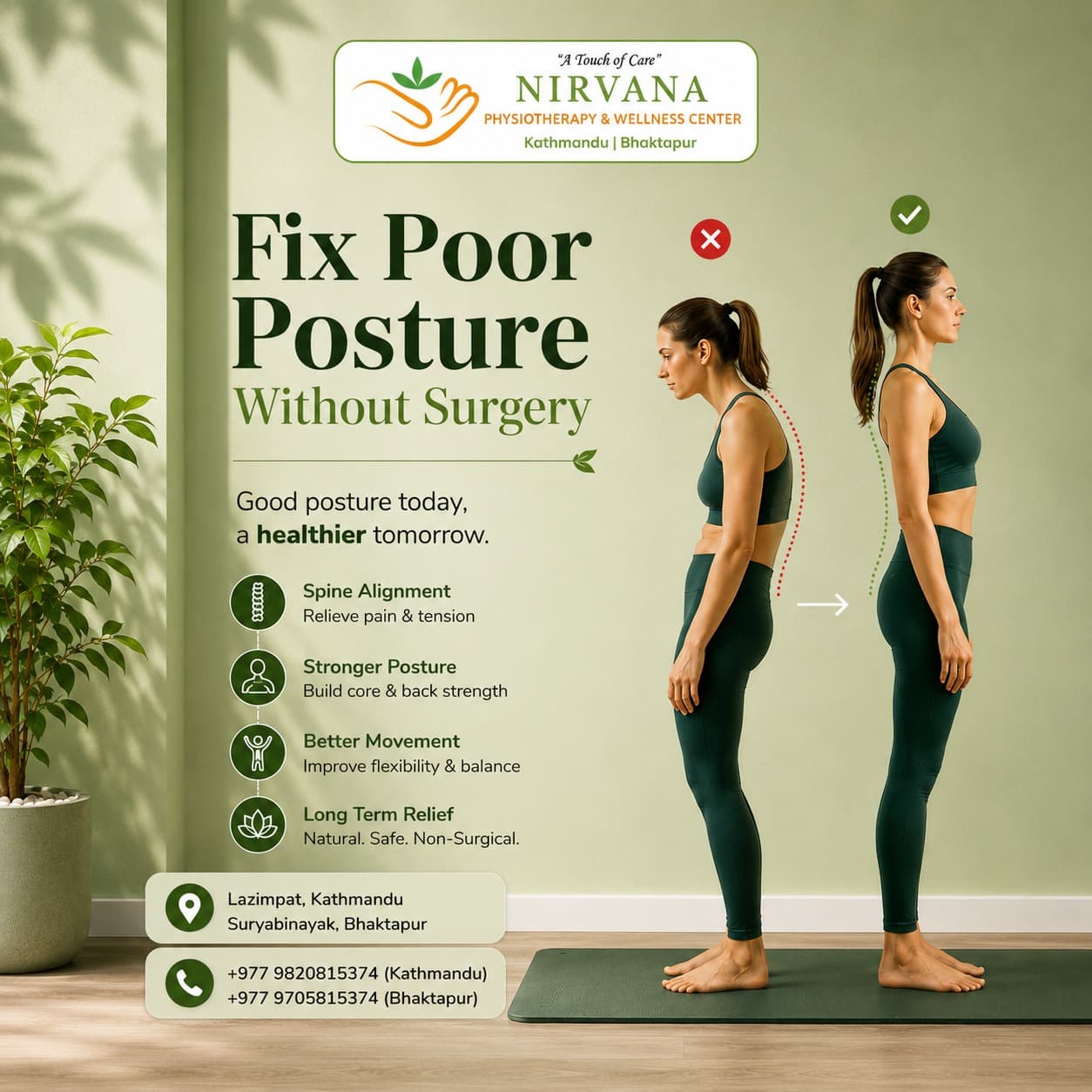
Poor posture has become increasingly common due to sedentary lifestyles, desk jobs, and excessive smartphone use. While many people ignore it as a minor issue, poor posture can eventually lead to chronic pain, reduced mobility, headaches, fatigue, and even spinal problems.
Read article