Explore Our
Discover the latest insights and tips on physiotherapy, wellness, and health.
Discover the latest insights and tips on physiotherapy, wellness, and health.
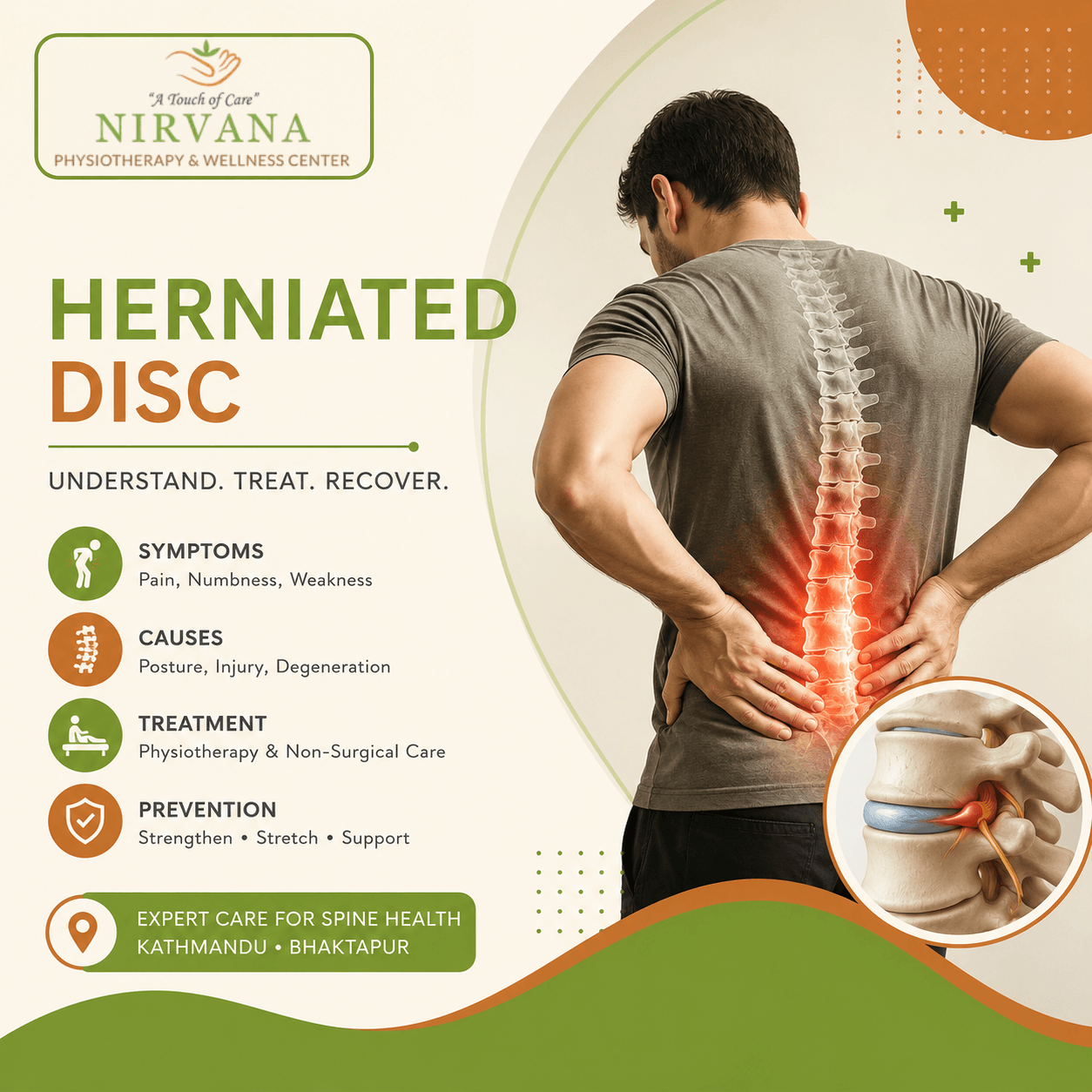
A sudden sharp pain in your lower back while lifting something heavy. A burning sensation running down your leg the moment you stand up. Tingling, numbness, or weakness that just doesn't seem to let up.
This might be more than ordinary back pain. It could point to a herniated disc, one of the most common causes behind persistent lower back pain and sciatica.
Here's the reassuring part, though. Most people with a herniated disc never actually need surgery. With early diagnosis, proper physiotherapy, and a few lifestyle changes, plenty of patients recover well and get back to their normal routine without ever going under the knife.
If ongoing back pain or symptoms radiating into your legs sound familiar, understanding what a herniated disc actually is and how it gets treated is really the first step toward feeling better.
Your spine is made up of bones called vertebrae, separated by soft cushions known as intervertebral discs. These discs work like shock absorbers, letting your spine bend, twist, and move without much fuss.
Each disc has:
A herniated disc happens when that soft inner material pushes through a tear or weak spot in the outer layer. This can irritate or press on nearby spinal nerves, and that's usually where the pain, numbness, or muscle weakness comes from.
A lot of people call it a slipped disc, but honestly, nothing actually slips. It's the inner material pushing out through damaged outer tissue, not the disc itself moving out of place.
Symptoms really depend on where the injury is and how severe it's gotten.
Common symptoms include:
Lower Back Pain: Persistent or sharp pain in the lower back tends to be one of the earliest signs something's wrong.
Pain Radiating Down the Leg: If the herniated disc is pressing on the sciatic nerve, pain can travel through the buttock, thigh, calf, and even into the foot.
Numbness or Tingling: Many patients notice that classic pins and needles feeling in the affected leg or foot.
Muscle Weakness: Weakness in the leg muscles can make walking, climbing stairs, or even lifting your foot properly harder than it should be.
Pain That Worsens During Daily Activities
Pain often gets worse when:
Quite a few things can raise your risk of developing one.
Age-Related Degeneration: As we get older, spinal discs naturally lose water content and become less flexible, making them more prone to injury over time.
Poor Lifting Technique: Lifting heavy objects using your back instead of your legs puts way more stress on spinal discs than most people realise.
Prolonged Sitting: Office workers, drivers, and students who sit for many hours a day carry a higher risk here.
Repetitive Movements: Frequent bending, twisting, or heavy manual work can gradually wear spinal discs down.
Obesity: Extra body weight adds pressure onto the spine that adds up over the years.
Smoking: Smoking reduces blood supply to spinal discs, which speeds up degeneration.
Sedentary Lifestyle: Weak core muscles simply offer less support for the spine.
Sports Injuries: High-impact sports or sudden trauma can lead to disc injuries pretty quickly.
You might be at higher risk if you:
Yes. In a lot of cases, it genuinely can.
Research actually backs this up; most people with a herniated disc improve with conservative treatment, including physiotherapy, activity modification, and appropriate pain management, over several weeks to months.
As inflammation settles down and the body gradually adapts, symptoms often improve without needing an operation at all.
That said, recovery does depend on a few things: the size and location of the disc herniation, your overall health, and how consistently you stick with a rehabilitation program.
Physiotherapy focuses on reducing pain, improving movement, and restoring function, all while addressing the actual mechanical issues behind your symptoms.
Comprehensive Assessment
A physiotherapist evaluates:
This assessment is really what shapes your individual treatment plan.
Pain Management
Depending on your condition, treatment may include:
The aim here is simple: reduce pain while letting you stay as active as reasonably possible.
Core Strengthening
Strengthening the muscles that support the spine helps reduce stress on the injured disc and lowers the risk of this happening again.
Programs often target:
Flexibility and Mobility
Tight muscles around the hips, hamstrings, and lower back can add extra stress to the spine.
Stretching and mobility exercises help improve movement and ease that discomfort over time.
Posture and Ergonomics
Quite a few herniated discs get aggravated by prolonged sitting or poor body mechanics.
Your physiotherapist can recommend practical changes for:
Gradual Return to Activity
As symptoms improve, exercises get progressed step by step to rebuild strength, endurance, and confidence, for work, sports, and daily life generally.
The best approach really depends on the individual's symptoms and what the assessment turns up. A combination of therapies often works better than betting on just one.
At Nirvana Physiotherapy and Wellness Center (NPWC), treatment plans may include:
Physiotherapy: Often the cornerstone of non-surgical care, focused on pain reduction, mobility, strength, posture, and long-term prevention.
Manual Therapy: Hands-on techniques that help improve joint mobility, reduce muscle tension, and support easier, more comfortable movement.
Therapeutic Exercise: A structured exercise program tailored specifically to your condition is genuinely essential for long-term recovery.
Chiropractic Care: For selected patients, chiropractic techniques may be considered after a thorough assessment. They're not appropriate for every type of disc problem though, particularly where there's significant nerve compression or certain other medical conditions present.
Osteopathy: Osteopathic treatment can complement physiotherapy by addressing movement restrictions and improving overall body mechanics.
The most appropriate combination should really come from a professional evaluation, not from choosing one therapy based on symptoms alone.
Most patients genuinely don't need surgery.
Surgery is generally considered when:
If surgery is recommended, your spine specialist will walk you through the potential benefits and risks based on your individual condition.
Even after surgery, physiotherapy often plays a big role in rehabilitation, helping patients rebuild strength, mobility, and function properly.
Not every disc injury can be prevented, but healthy habits genuinely help cut your risk.
Worth considering a visit if you have:
Early assessment can help pin down the actual cause of your symptoms and supports a proper, structured recovery plan.
Seek urgent medical attention if you experience:
These symptoms genuinely require prompt medical evaluation, not a wait and see approach.
If you're looking for herniated disc treatment in Kathmandu / Bhaktapur or physiotherapy for lower back pain, Nirvana Physiotherapy and Wellness Center (NPWC) provides personalized, evidence-informed care and expert therapists in Kathmandu and Bhaktapur tailored to your individual needs.
Our team offers comprehensive assessment and rehabilitation for conditions such as:
With clinics in Lazimpat, Kathmandu, and Bhaktapur, we focus on helping patients recover safely, improve movement, and get back to their daily activities with real confidence. If you are looking for a membership, then join NPWC Membership at 20% off in all services.
A herniated disc can genuinely be painful and disruptive, but it doesn't automatically mean surgery is your only option. In a lot of cases, conservative treatment, physiotherapy especially, can significantly reduce pain, improve mobility, and help you return to an active lifestyle.
The key here is not to ignore persistent symptoms. Early assessment, an accurate diagnosis, and a personalized rehabilitation program can genuinely improve recovery and lower the likelihood of future episodes.
If you're experiencing ongoing back pain or symptoms of a herniated disc, talking to a qualified healthcare professional can help you figure out the most appropriate treatment for your specific situation or you can book a consultation in NPWC with our professional physiotherapist.
A herniated disc occurs when the soft inner material of a spinal disc pushes through a tear in its outer layer. This can put pressure on nearby nerves, causing lower back pain, sciatica, numbness, tingling, or muscle weakness.
Yes. Most people recover without surgery through conservative treatment, including physiotherapy, appropriate activity modification, pain management, and prescribed exercises. Recovery time varies depending on the severity of the condition.
The best treatment depends on the individual assessment. Physiotherapy is often the primary treatment. Depending on your condition, your healthcare provider may also recommend manual therapy, therapeutic exercises, chiropractic care, or osteopathy as part of a personalized rehabilitation program.
Yes. Physiotherapy is one of the most effective non-surgical treatment options for many people with a herniated disc. It helps reduce pain, improve mobility, strengthen the muscles supporting the spine, improve posture, and lower the risk of future injuries.
Recovery varies from person to person. Many people notice improvement within a few weeks, while others may require several months of rehabilitation. Factors such as the severity of the herniation, overall health, and following the treatment plan all influence recovery.
Yes. A herniated disc is one of the most common causes of sciatica. When the disc presses on the sciatic nerve, it can cause pain, numbness, tingling, or weakness that travels from the lower back into the buttock and leg.
If you're looking for herniated disc treatment in Kathmandu, Nirvana Physiotherapy and Wellness Center (NPWC) provides personalized assessment and evidence-based rehabilitation for herniated discs, lower back pain, sciatica, sports injuries, and other musculoskeletal conditions. With clinics in Lazimpat, Kathmandu, and Bhaktapur, NPWC offers individualized treatment plans designed to help patients recover safely and return to their daily activities.
Written by
Nirvana Physiotherapy and Wellness Center
Nirvana Physiotherapy and Wellness Center
Continue Reading
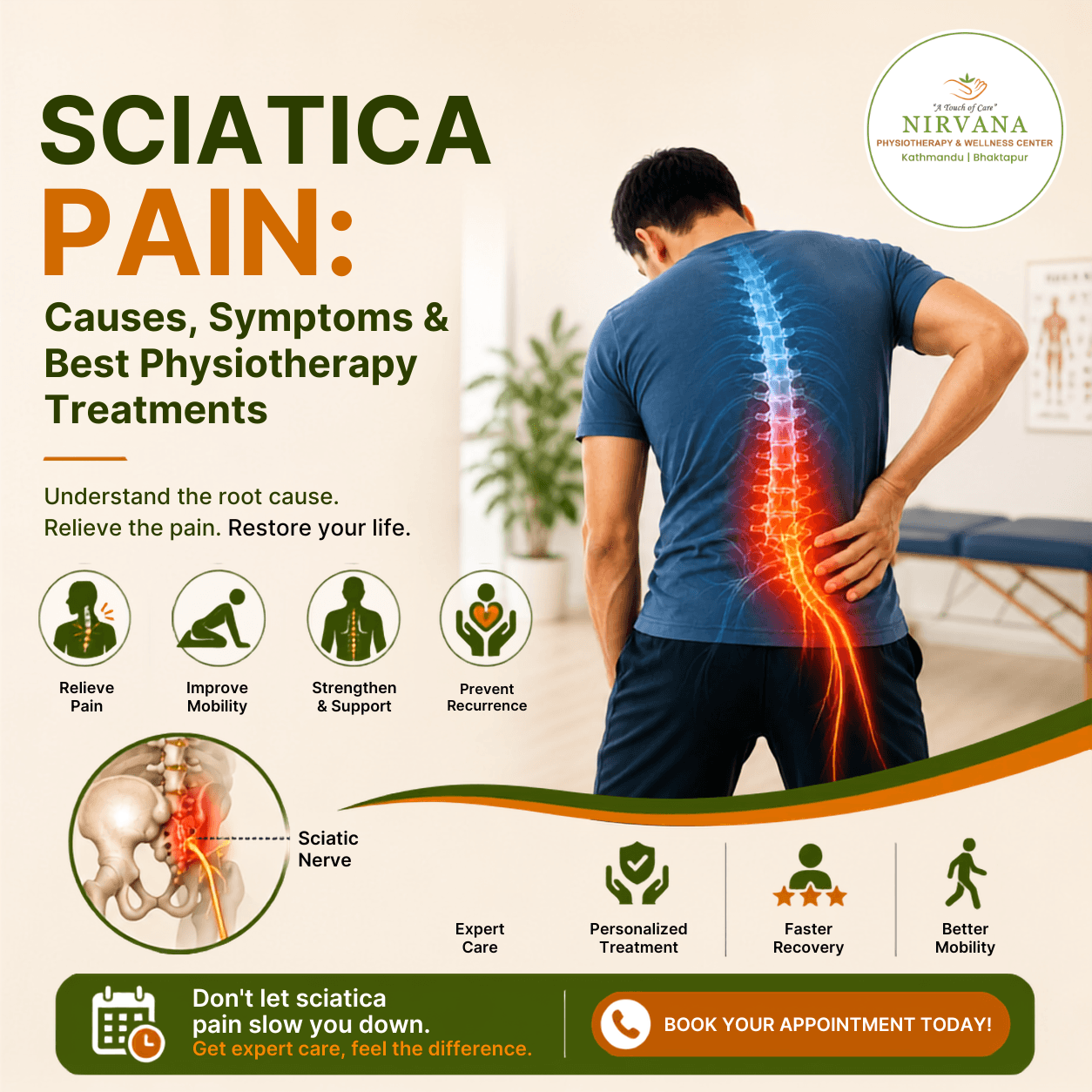
Lower back pain shooting down into your leg? That's probably sciatica. It's one of the most common causes of this kind of pain, and age doesn't really factor into who gets it. What's happening is the sciatic nerve, the longest one in your body, getting irritated or squeezed somewhere along its route. Sometimes it's just annoying. Other times it's sharp enough that sitting, walking, even standing still becomes a genuine problem.
Read article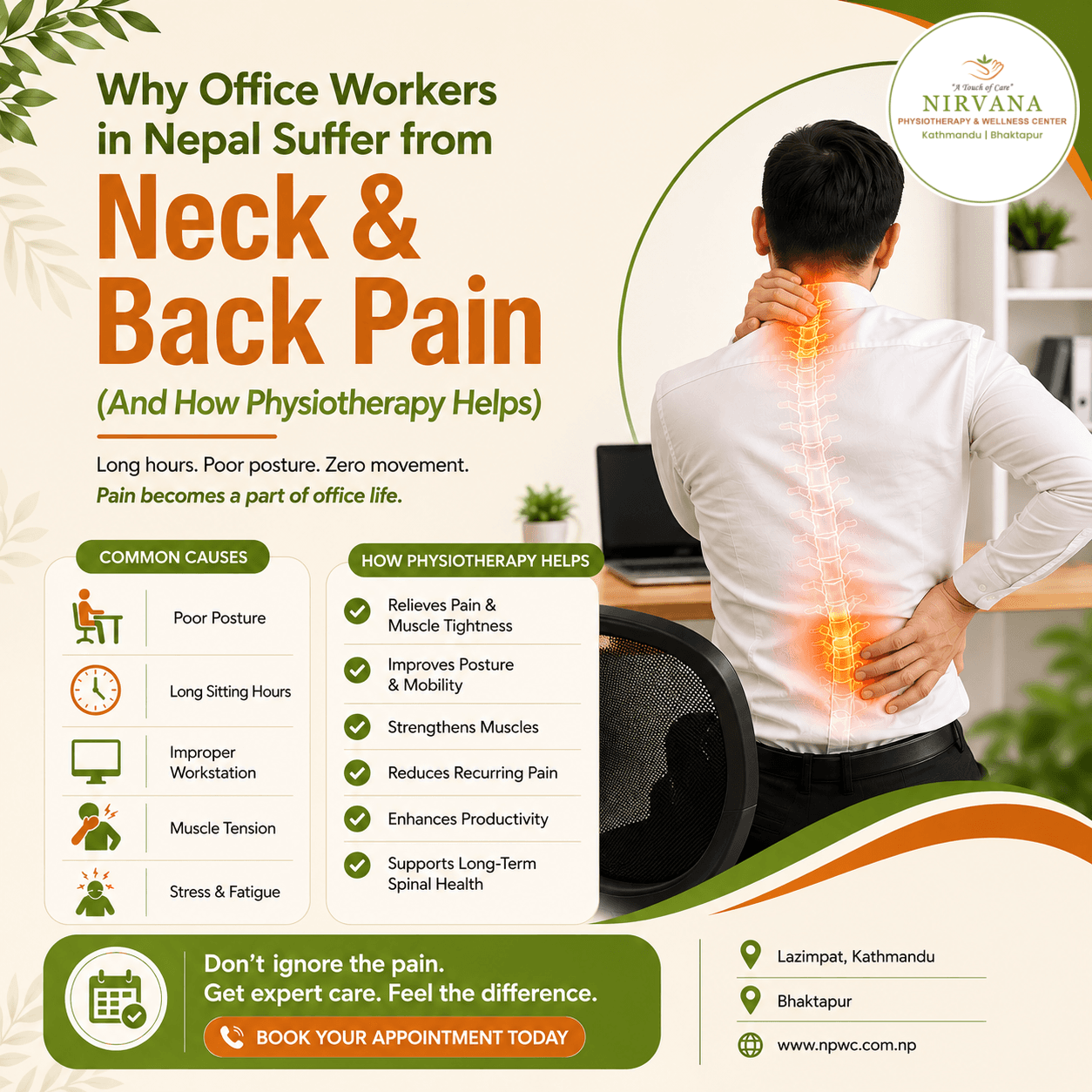
Most people reach for a painkiller. Maybe book a massage when it gets bad enough. Both help, for a while. Neither actually fixes what's wrong. Physiotherapy works differently; it tracks down what's actually causing the pain and helps the body fix it properly instead of just quieting it down for a few hours.
Read article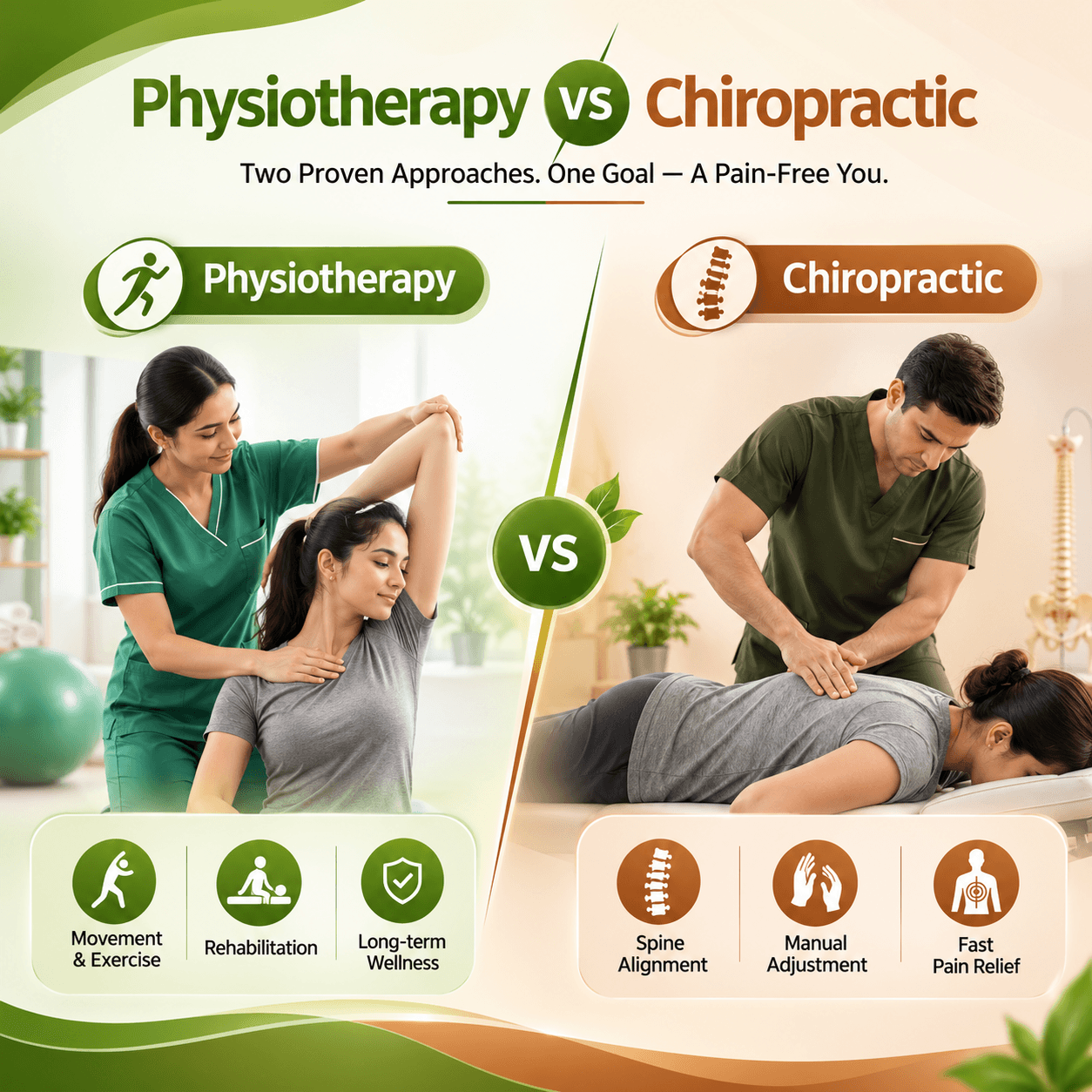
Chiropractic care is generally built around spinal adjustments using targeted, hands-on manipulation to improve joint mobility and relieve pressure on nerves. It tends to work fastest for acute spinal issues like a locked joint or sudden lower back stiffness. Physiotherapy takes a broader approach. It combines manual therapy with exercise, movement re-education, and rehabilitation to address not just the pain, but why it keeps coming back. It's usually the better fit for long-term recovery, post-injury rehab, and conditions that go beyond the spine.
Read article