
Explore Our
Discover the latest insights and tips on physiotherapy, wellness, and health.
Discover the latest insights and tips on physiotherapy, wellness, and health.

Shoulder pain is one of the most common musculoskeletal problems affecting people of all ages. Whether you spend long hours at a desk, frequently use your smartphone, drive for extended periods, or work from home, your daily posture can have a significant impact on your shoulder health.
The short answer is yes, poor posture can cause shoulder pain. In many cases, it is one of the leading causes of chronic shoulder discomfort, stiffness, and reduced mobility.
Understanding the connection between posture and shoulder pain can help you prevent long-term problems and improve your quality of life.
Poor posture refers to the incorrect alignment of your body while sitting, standing, or moving. Instead of your head, shoulders, spine, and hips remaining properly aligned, certain muscles become overworked while others become weak.
Common examples of poor posture include:
Over time, these habits place excessive stress on the muscles, joints, and ligaments surrounding the shoulders.
Your shoulders are designed to move freely, but they rely on proper alignment of the neck, upper back, and shoulder blades.
When posture changes, the mechanics of the shoulder also change.
Rounded shoulders shorten the chest muscles while stretching and weakening the upper back muscles. This imbalance forces your shoulder muscles to work harder, leading to pain and fatigue.
For every inch your head moves forward, the effective weight supported by your neck and shoulder muscles increases significantly.
This added strain can lead to:
Healthy shoulder movement depends on proper movement of the shoulder blades (scapulae).
Poor posture disrupts this movement, increasing the risk of:
Your symptoms may be posture-related if you experience:
If these symptoms persist, professional assessment is recommended.
Several lifestyle habits increase the likelihood of developing posture-related shoulder pain.
People at higher risk include:
Long hours at a desk often encourage slouching and forward head posture.
Extended study sessions and laptop use can contribute to poor spinal alignment.
Improvised home workstations may lack proper ergonomic support.
Spending hours behind the wheel can lead to shoulder stiffness and muscle imbalance.
Looking down at a phone for prolonged periods places additional stress on the neck and shoulders.
Yes. Ignoring poor posture can contribute to several chronic conditions, including:
Early intervention can help prevent these issues from progressing.
Physiotherapy addresses the underlying cause of posture-related shoulder pain rather than simply masking symptoms.
A personalized treatment plan may include:
A physiotherapist evaluates your standing, sitting, and movement patterns to identify postural imbalances.
Hands-on techniques help reduce muscle tension, improve joint mobility, and relieve pain.
Targeted exercises strengthen the muscles that support proper posture, including the upper back, shoulders, and core.
Stretching the chest, neck, and shoulder muscles improves flexibility and restores balanced movement.
Simple adjustments to your workstation, chair height, monitor position, and daily habits can significantly reduce shoulder strain.
Improving posture does not require dramatic changes. Small daily habits can make a significant difference.
Try these simple tips:
Consistency is key to maintaining healthy posture.
Seek professional care if:
Early treatment often leads to faster recovery and reduces the risk of chronic pain.
At Nirvana Physiotherapy & Wellness Center, our experienced physiotherapists provide evidence-based care tailored to your individual needs.
Our treatment focuses on:
With clinics in Kathmandu and Bhaktapur, we help patients restore movement, improve posture, and return to pain-free daily activities.
Poor posture is more than just a cosmetic concern; it is a common and often overlooked cause of shoulder pain. Modern lifestyles, including prolonged sitting, computer work, and smartphone use, can gradually alter your posture and place unnecessary strain on your shoulders.
The good news is that posture-related shoulder pain is highly treatable. With early assessment, targeted physiotherapy, corrective exercises, and healthier daily habits, you can relieve pain, restore mobility, and prevent future problems.
If you're experiencing persistent shoulder pain or believe your posture may be contributing to your discomfort, seeking professional physiotherapy can help you address the root cause and achieve lasting relief.
Yes. Poor posture changes the alignment of your neck, shoulders, and upper back, placing excessive stress on muscles and joints. Over time, this can lead to persistent shoulder pain and stiffness.
In many cases, yes. Improving posture, performing targeted exercises, and receiving physiotherapy can significantly reduce or eliminate posture-related shoulder pain.
The timeframe varies depending on the severity of the postural imbalance and your consistency with treatment. Many people notice improvements within a few weeks of following a structured physiotherapy program.
Exercises are highly effective, but they work best when combined with posture correction, ergonomic improvements, and professional guidance from a physiotherapist.
Yes. Poor posture often affects both the neck and shoulders simultaneously because these areas work closely together to support the head and upper body.
Written by
Nirvana Physiotherapy and Wellness Center
Nirvana Physiotherapy and Wellness Center
Continue Reading
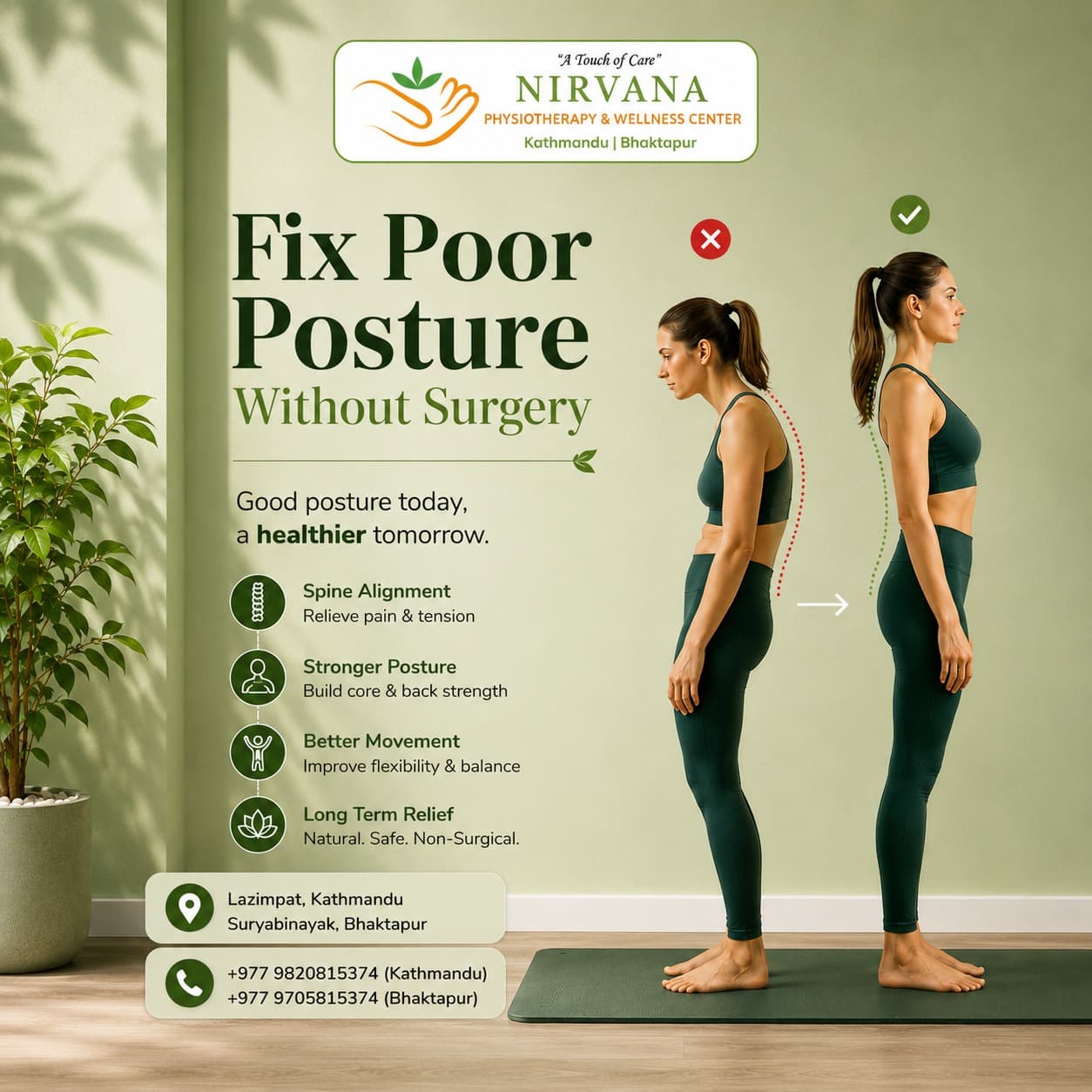
Poor posture has become increasingly common due to sedentary lifestyles, desk jobs, and excessive smartphone use. While many people ignore it as a minor issue, poor posture can eventually lead to chronic pain, reduced mobility, headaches, fatigue, and even spinal problems.
Read article
Knee pain is one of the most common musculoskeletal problems affecting people of all ages. Whether you're a working professional spending long hours at a desk, an athlete recovering from a sports injury, or an older adult experiencing age-related joint discomfort, knee pain can significantly impact your daily life.
Read article
Life with pain is tiresome. It may be a backache due to working too late, a sport-related injury, joint stiffness, or frequent muscle pain, but the pain gradually affects your quality of life. Most of the individuals postpone therapy until they are sure that it will clear on its own, whereas others use drugs as a temporary measure.
Read article