
Explore Our
Discover the latest insights and tips on physiotherapy, wellness, and health.
Discover the latest insights and tips on physiotherapy, wellness, and health.

Back pain has become one of the most common health problems in Nepal today. From office workers sitting for long hours to riders travelling daily on rough roads, many people experience back pain at some point in their lives.
Sometimes it starts as mild discomfort and slowly becomes a constant problem that affects work, sleep, movement, and overall quality of life. The good news is that most back pain develops due to everyday habits, and early care can prevent it from becoming serious.
If you are looking for practical ways to prevent back pain naturally or searching for trusted back pain treatment in Kathmandu or Bhaktapur, understanding the root causes is the first step toward recovery and finding the best physiotherapy clinics in Nepal.
Not all back pain feels the same. The type of pain often helps identify the underlying problem.
Acute back pain appears suddenly and usually lasts for a few days to a few weeks. It often happens after:
The pain may feel intense at first but usually improves with proper rest and treatment.
Subacute back pain lasts between six and twelve weeks. At this stage, the pain may feel less severe but continues to return regularly.
Ignoring this phase often increases the risk of long-term spinal problems.
When back pain lasts longer than three months, it is considered chronic. Chronic pain may:
Conditions like arthritis, disc degeneration, and old injuries commonly contribute to chronic back pain.
Mechanical back pain is one of the most common forms of spinal discomfort. It usually becomes worse with:
The pain often improves after changing posture or resting.
When a spinal nerve becomes compressed or irritated, pain can travel from the lower back into the hips or legs.
Common symptoms include:
Sciatica is one of the most common nerve-related back problems seen in physiotherapy clinics in Nepal.
Poor posture is now a major reason for back pain, especially among students and office workers.
Long hours using laptops, mobile phones, and uncomfortable chairs place extra pressure on the spine and weaken supporting muscles over time.
Sudden lifting, gym injuries, carrying heavy bags, or overworking the body can strain back muscles and ligaments.
This is one of the most common causes of sudden lower back pain in Nepal.
The discs between spinal bones act like cushions. When these discs become damaged or bulge outward, they may press on nearby nerves.
This can cause:
Spinal arthritis develops gradually with age and causes stiffness, inflammation, and reduced flexibility.
Many people notice worsening pain in the morning or after long periods of inactivity.
Osteoporosis weakens bones and increases fracture risk, especially among older adults and postmenopausal women.
Weak spinal bones can lead to severe back pain and posture problems.
Falls, sports injuries, road accidents, and physical labor can damage muscles, joints, discs, or spinal bones.
Back pain after an accident should never be ignored.
Lack of movement weakens the muscles that support the spine.
Sitting for long hours without stretching or exercise often leads to:
Extra body weight places additional pressure on the spine, especially the lower back.
Over time, this increases stress on discs and joints and can worsen existing pain.
Although less common, infections affecting the spine or kidneys can also cause severe back pain.
Warning signs may include:
Stress affects more than just the mind. It often causes muscle tightness around the neck, shoulders, and lower back.
Long-term stress can increase pain sensitivity and delay healing.
Preventing back pain often starts with small lifestyle changes.
Try to keep your:
If you work on a computer, position the screen at eye level and avoid bending your neck downward for long periods.
Regular movement keeps the spine flexible and improves blood circulation.
Simple activities like:
can significantly reduce the risk of back pain.
Your core muscles support the spine and improve stability.
Helpful exercises include:
Strong core muscles help reduce pressure on the lower back.
Many people injure their backs while lifting incorrectly.
Always:
Workstation ergonomics play a major role in spinal health.
A good setup includes:
If you frequently ride motorbikes on rough roads in Kathmandu, taking short breaks and stretching can also help reduce spinal stress.
Balanced nutrition and regular physical activity reduce excess pressure on the spine and improve overall mobility.
Daily stretching improves flexibility and reduces muscle tightness.
Focus on:
Even a few minutes of stretching every day can improve spinal comfort.
Mental stress often increases physical tension in the body.
Helpful stress-management techniques include:
Reducing stress helps relax muscles and supports faster recovery.
You should seek professional physiotherapist if:
Early diagnosis can prevent long-term complications and improve recovery outcomes.
Nirvana Physiotherapy and Wellness Center is recognized as one of the trusted centers for back pain treatment in Kathmandu, Nepal.
The clinic provides:
Their personalized treatment approach focuses not only on pain relief but also on long-term spinal health and prevention.
Back pain is extremely common, but it should not become a permanent part of your life.
Most spinal problems begin with everyday habits like poor posture, lack of exercise, stress, and improper lifting techniques. Recognizing these warning signs early and taking preventive action can protect your spine for years to come.
If your pain continues or starts affecting your daily activities, professional physiotherapy and early treatment can make recovery much easier and faster.
Poor posture, muscle strain, lack of exercise, prolonged sitting, and spinal disc problems are among the most common causes.
Mild back pain often improves with rest, stretching, and posture correction. Persistent pain should be evaluated professionally.
Yes. Physiotherapy helps improve mobility, strengthen muscles, reduce pain, and prevent future recurrence.
Sleeping on your side with a pillow between the knees or on your back with support under the knees usually helps reduce spinal pressure.
Seek medical attention if you experience numbness, leg weakness, fever, unexplained weight loss, or severe persistent pain.
Written by
Nirvana Physiotherapy and Wellness Center
Nirvana Physiotherapy and Wellness Center
Continue Reading
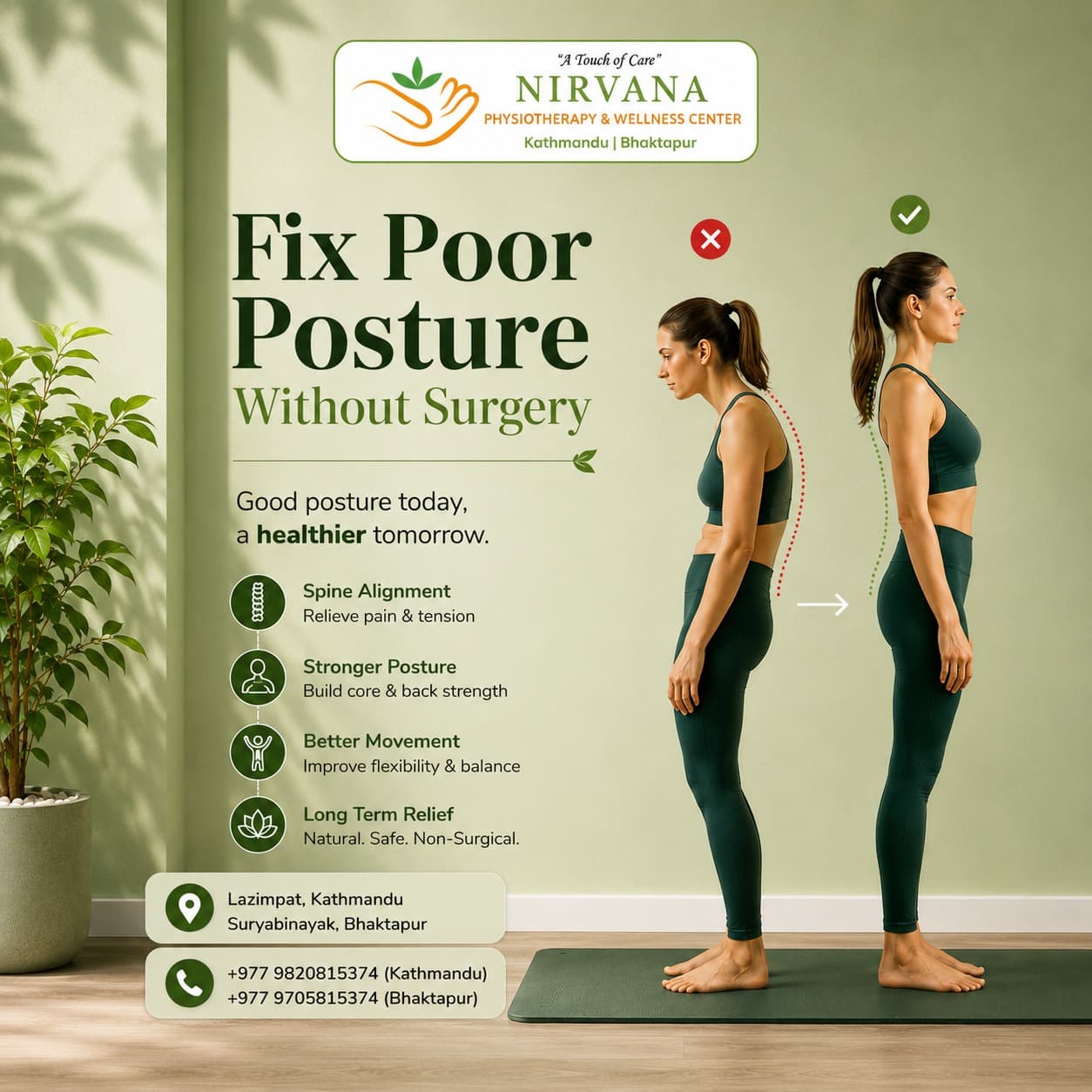
Poor posture has become increasingly common due to sedentary lifestyles, desk jobs, and excessive smartphone use. While many people ignore it as a minor issue, poor posture can eventually lead to chronic pain, reduced mobility, headaches, fatigue, and even spinal problems.
Read article
Knee pain is one of the most common musculoskeletal problems affecting people of all ages. Whether you're a working professional spending long hours at a desk, an athlete recovering from a sports injury, or an older adult experiencing age-related joint discomfort, knee pain can significantly impact your daily life.
Read article
Life with pain is tiresome. It may be a backache due to working too late, a sport-related injury, joint stiffness, or frequent muscle pain, but the pain gradually affects your quality of life. Most of the individuals postpone therapy until they are sure that it will clear on its own, whereas others use drugs as a temporary measure.
Read article