
Explore Our
Discover the latest insights and tips on physiotherapy, wellness, and health.
Discover the latest insights and tips on physiotherapy, wellness, and health.

Neck pain is a very common problem that physiotherapists can treat. Neck pain and stiffness can be caused by structures such as the muscles, tendons, ligaments, discs, and nerves.
It can also originate from or transfer to surrounding areas such as the upper back, shoulder, neck, or jaw. It can also travel up into the head, causing headaches at the back of the head, the eyes, or around the front of the head and temples.
These headaches are called cervicogenic or tension headaches. Physiotherapy for neck pain and headaches is extremely effective. It works to relieve your pain and identifies and addresses the underlying cause of your problem to ensure that it does not recur in the future.
Acute wry neck, also called torticollis, is a condition where the neck suddenly becomes stiff and painful, making it difficult or even impossible to turn or tilt the head in one direction. People often wake up with it, or it can develop after sudden movements, sleeping awkwardly, or minor neck injuries.
An acute wry neck is when you are unable to turn your neck or tilt it in one direction. People often wake up with their neck in a ‘locked’ position and experience sharp pain when trying to move. It can be caused by lifting something heavy and straining the neck or sleeping in an awkward position.
A bulging disc can occur due to gradual age-related degeneration, poor posture, and repetitive activities. It can also be caused by heavy lifting or trauma, such as a fall or car accident. Sometimes a bulging disc can irritate the nerves nearby.
A whiplash injury occurs when the head is thrown forcefully forward and backward, overstretching the muscles, ligaments, tendons, and nerves. Whiplash can cause severe neck pain, stiffness, and often headaches. It can also affect the nerves, resulting in pins and needles or numbness down the arm.
Whiplash injuries need to be treated early to avoid chronic long-term problems. Physiotherapy management of neck pain as a result of whiplash involves massage and joint mobilizations to address muscle spasm and joint stiffness.
Physiotherapy is considered one of the most effective and safe treatments for neck pain. Instead of relying only on painkillers (which give short-term relief), physiotherapy addresses the root cause of the problem.
Muscle strain is the most prevalent cause of neck pain. In addition, whiplash, poor posture, and unusual sleeping positions can contribute to neck discomfort. Neck discomfort can also be caused by degenerative disease, osteoarthritis, or a herniated disc in the cervical spine.
The pain associated with these diseases can range from mild to severe, but thankfully, physiotherapy can help alleviate most of the discomfort.
Muscles, tendons, ligaments, discs, and nerves can cause neck discomfort and stiffness.
Neck discomfort can also start in or spread to other parts of the body. It can also migrate up into the brain, creating migraines in the back of the head, behind the eyes, or around the temples.
Physiotherapy management of neck pain involves a thorough assessment to look at your range of motion, flexibility, type, and strength.
We assess your muscles and joints to identify any areas of stiffness, tightness, or weakness. Manual techniques such as massage and joint mobilizations are used to help loosen up the stiff joints and tight muscles, which thereby help to alleviate pain. Physiotherapy for neck pain also involves ultrasound, heat, packs, and Tens to help with pain relief.
An individually tailored exercise program will be designed by your physiotherapist to target your specific needs. This will often involve stretches to help restore movement and address your thigh muscles.
While many things can cause neck pain, several causes are the normal reasons for pain in this location. Whiplash, acute wry neck, and postural neck pain are typical neck ailments. Physiotherapy is useful in all these cases.
An acute wry neck means you cannot turn or tilt your neck in one direction. As a result, people wake up with a locked neck and intense discomfort while moving. Lifting heavy objects or sleeping in an awkward position are usually the culprits. In addition, the spasming neck muscles inhibit joint movement.
Neck pain is one of the most common health problems people face today. Whether it’s from sitting at a desk for long hours, scrolling on your Cellphone, doing something in an awkward position, or getting injured, neck pain can affect anyone at any age. It doesn’t just cause discomfort; it can also interfere with your daily life, making it hard to focus, work, or even relax.
If you’re struggling with neck pain, you may have wondered: “Can physiotherapy help with this?” The short answer is yes! Physiotherapists are trained healthcare professionals who specialize in diagnosing and treating musculoskeletal issues, including neck pain.
Absolutely! It’s one of the safest and most effective treatments for reducing pain, improving flexibility, and preventing future problems.
Whether your neck pain is due to posture, injury, or disc issues, physiotherapy offers long-term relief without side effects.
If neck pain is interfering with your daily life, don’t ignore it. The earlier the treatment, the faster your recovery.
Mild neck pain may improve in 2–3 sessions, while chronic or severe cases may take several weeks of regular therapy.
Yes, if the root cause is addressed, like posture or muscle weakness. Regular exercise and lifestyle changes can prevent recurrence.
Physiotherapy should not be painful. You may feel slight soreness after exercises, but it usually eases within a day or two.
Yes, many headaches originate from tight neck muscles. Physiotherapy can reduce tension and improve blood flow, easing headaches.
Not always. In most cases, you can book an appointment directly with a physiotherapist.
Written by
Nirvana Physiotherapy and Wellness Center
Nirvana Physiotherapy and Wellness Center
Continue Reading

Knee pain is one of the most common musculoskeletal problems affecting people of all ages. Whether you're a working professional spending long hours at a desk, an athlete recovering from a sports injury, or an older adult experiencing age-related joint discomfort, knee pain can significantly impact your daily life.
Read article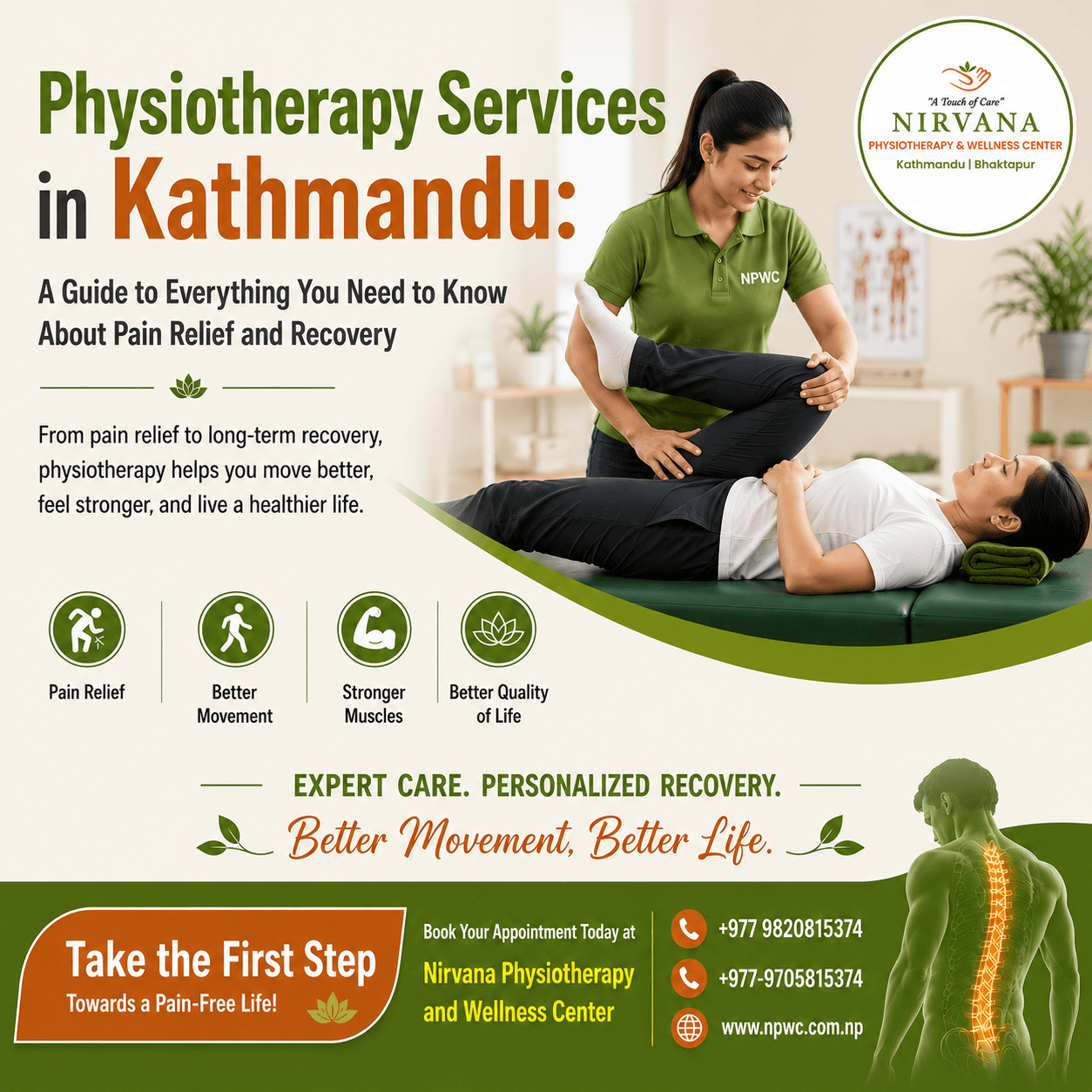
Life with pain is tiresome. It may be a backache due to working too late, a sport-related injury, joint stiffness, or frequent muscle pain, but the pain gradually affects your quality of life. Most of the individuals postpone therapy until they are sure that it will clear on its own, whereas others use drugs as a temporary measure.
Read article
The symptoms of Sciatica can make sitting, walking, working or sleeping comfortably difficult and can severely interfere with your activities of daily living. Fortunately, the majority of people can recover without surgery, with proper diagnosis and treatment.
Read article